The main types of fades are the low fade, mid fade, high fade, taper and skin fade. The difference between them comes down to two things: where the fade starts on the side and back of the head, and how short it gets at the bottom. A low fade starts just above the ears, a mid fade around the temples, and a high fade up near the top of the head's curve. A taper is a softer, more conservative version that shortens only around the sideburns and neckline, and a skin fade blends all the way down to bare skin. Every barber student learns all of them, because clients ask for them every day.
What is a fade?
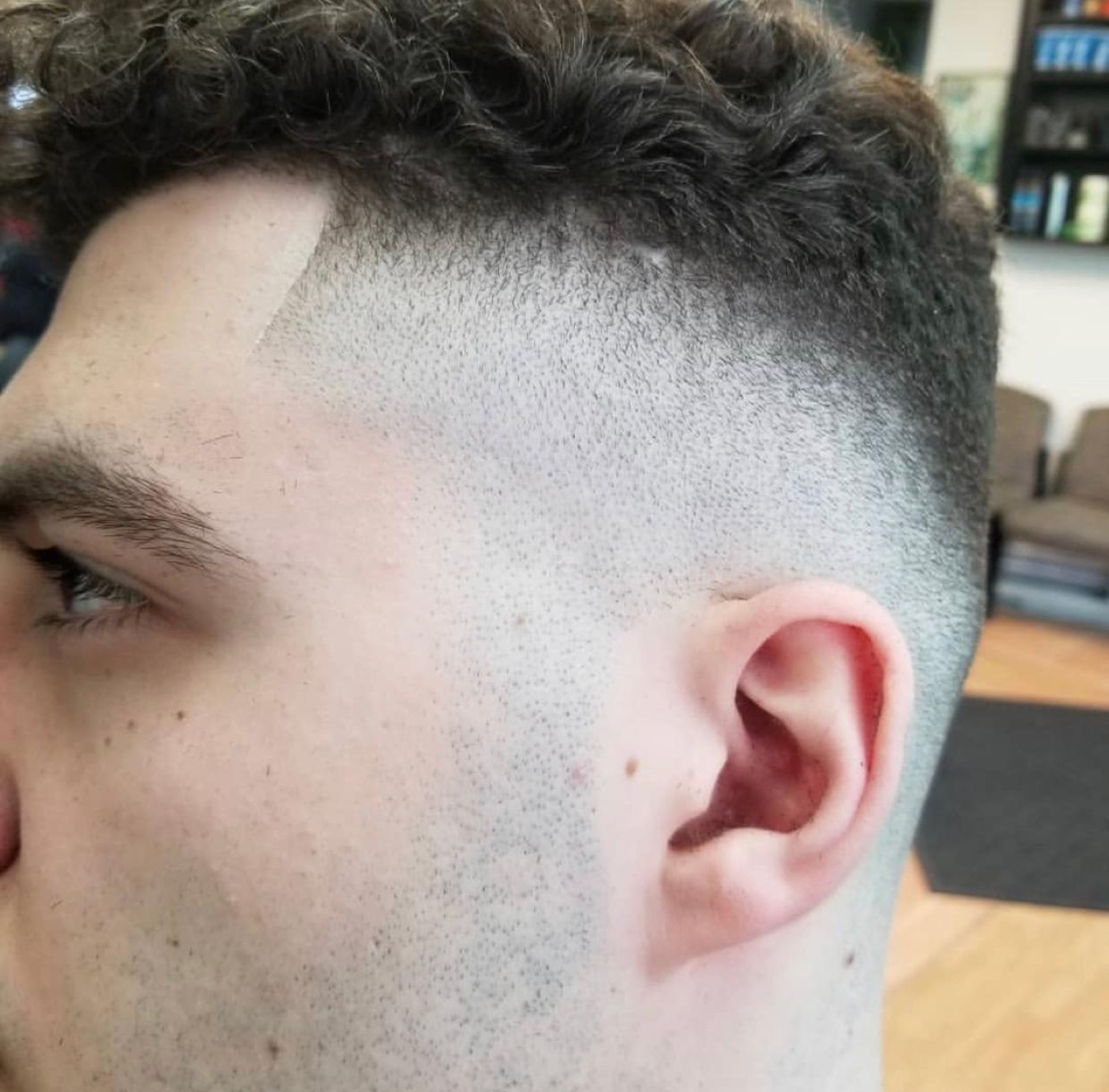
A fade is a haircut where the hair on the sides and back gets gradually shorter from top to bottom, blending smoothly from longer hair into very short hair (or skin) without visible lines. A good fade looks like a soft gradient. A rough one shows "steps" or bands where one guard length meets another. Learning to make that transition seamless is one of the core skills of barbering.
Low fade
Where it starts: low on the head, just above the ears and following the hairline around the back of the neck.
What clients ask for: "Keep it low," "a little fade on the sides," or "clean, but not too short." It's a popular choice for people who want a sharp look that still keeps most of their length on the sides.
What it suits: almost everyone. It's subtle enough for conservative workplaces and pairs well with longer tops, curls, waves and textured styles.
Mid fade
Where it starts: roughly halfway up the sides, around the level of the temples.
What clients ask for: "A regular fade" or "somewhere in the middle." The mid fade is the balanced option, more contrast than a low fade, less dramatic than a high fade.
What it suits: a wide range of head shapes and hair types. It works with short and medium-length tops, waves, caesars and many everyday styles.
High fade
Where it starts: high on the head, up near where the sides begin to curve toward the top (the area barbers often call the parietal ridge or the "round" of the head).
What clients ask for: "Take it up high," "a lot of contrast," or a specific style like a high-top fade or a short, bold cut with most of the sides cleaned out.
What it suits: clients who want a strong, clean, high-contrast look. It's common with high-top fades, flat tops, mohawks and short, sharp styles. Because so much of the sides is short, head shape matters more, and a good barber will talk it through with the client.
Taper
Where it starts: only at the edges, around the sideburns and the neckline at the back. The rest of the sides keep more of their length.
What clients ask for: "Just clean up the edges," "a taper, not a fade," or "something professional." Many clients use "taper" and "fade" interchangeably, so it's always worth asking exactly how short they want it and how high it should go.
What it suits: classic and conservative looks, longer hair, curly hair and anyone who wants a neat, grown-out style that still looks sharp. The classic taper is one of the first cuts barber students learn, because it teaches control and gradual blending without going to skin.
Skin fade (bald fade)
Where it starts: a skin fade can be low, mid or high. What makes it a skin fade is that the shortest part goes all the way down to bare skin, usually finished with a foil shaver or a razor.
What clients ask for: "Bald fade," "skin fade," "zero at the bottom," or "a low skin" or "high skin" to show where it starts.
What it suits: clients who want maximum contrast and a very crisp finish. It grows out faster visually, so clients who get skin fades tend to come back more often.
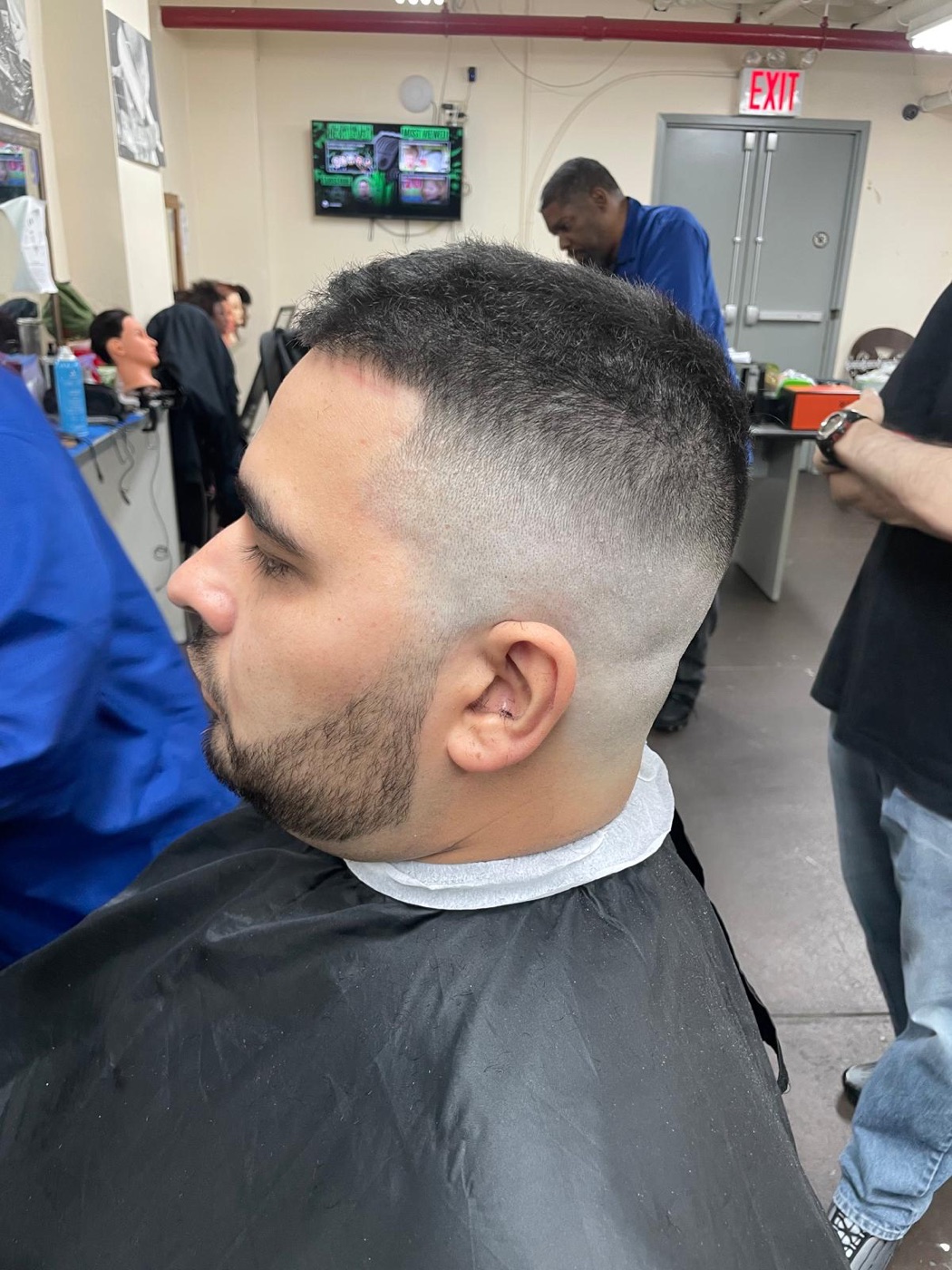
How barbers build a fade: the core techniques
Every barber develops a personal approach over time, but the fundamentals are the same:
- Choosing guards. Clipper guards (and the clipper's adjustable lever) control how long the hair is left. A fade moves from a longer guard at the top of the blend to a shorter guard, or no guard, at the bottom.
- Setting the guideline. The first step is usually setting a guideline, a clear starting line that marks where the fade begins. Where you place it decides whether the cut becomes a low, mid or high fade, so it has to be even all the way around the head.
- Blending. Blending removes the lines between guard lengths. Barbers use techniques like flicking or rocking the clipper out of the hair, working in small sections, using the lever and stepping between guard sizes to soften every transition.
- Checking from every angle. Good barbers constantly check the fade under the light, in the mirror and from both sides to make sure it's balanced and even.
- Detailing. Trimmers, razors and edge-up work clean up the hairline, around the ears and the neckline. A great fade with a sloppy lineup still looks unfinished.
None of this comes from reading. It comes from repetition on real heads with someone experienced watching and correcting you.
Where fades fit into barber school
At American Barber Institute, the first two weeks or so are theory: sanitation and sterilization, barber history, New York barber law and shop management. After that, training is hands-on, and students begin working on real clients in the supervised student clinic within the first few weeks.
The 500-hour curriculum covers classic tapers, low, mid and high fades, high-top fades, caesars, bald heads, fohawks, pompadours, afros, flat tops, mohawks, razor lineups, shape-ups, beard trims, scissor and clipper cuts, and more. Because clinic clients are real members of the public, students get practice on many different hair types and textures, which is exactly what fades demand. You can see the full list on our skills and techniques page.
New to barber school? Read what to expect in your first week. And when you're ready to put your skills to the test, the State practical exam is the last step before you're licensed, and the NY Department of State publishes the list of tasks evaluated on it. Our guide to the NY barber practical exam explains how it works.
Want to see fade training in person? Call (212) 290-2289 (English) or (212) 290-0278 (Español) for Manhattan, or (718) 676-0640 for the Bronx, and book a free tour.
Frequently Asked Questions
What are the main types of fades?
The main types are the low fade, mid fade, high fade, taper and skin fade. They differ in where the fade starts on the side and back of the head and how short it gets at the bottom.
What is the difference between a taper and a fade?
A taper shortens the hair only at the edges, around the sideburns and neckline, so the sides keep more length, while a fade blends shorter over more of the sides, often down to very short hair or skin. Many clients use the two words interchangeably, so a good barber asks how short and how high they want it.
What is the difference between a low, mid and high fade?
It's where the fade starts. A low fade starts just above the ears, a mid fade around the temples, and a high fade up near where the sides curve toward the top of the head.
What is a skin fade?
A skin fade, also called a bald fade, is a fade whose shortest part goes all the way down to bare skin, usually finished with a foil shaver or a razor. It can start low, mid or high.
Do you learn fades in barber school?
Yes. At American Barber Institute, the 500-hour curriculum covers classic tapers, low, mid and high fades and high-top fades, practiced on real clients in the supervised student clinic after about two weeks of theory.
Ready to start your barbering career? Explore the 500-Hour Master Barber Program or book a free tour.